Artificial intelligence is evolving rapidly. What started as models capable of answering questions or generating content is giving way to far more sophisticated systems — ones that can collaborate, learn, adapt, and operate with increasing autonomy.
In this context, HISTORA's CTO, Matías Molinas, participated in a session focused on some of the emerging architectures defining the future of intelligent systems.
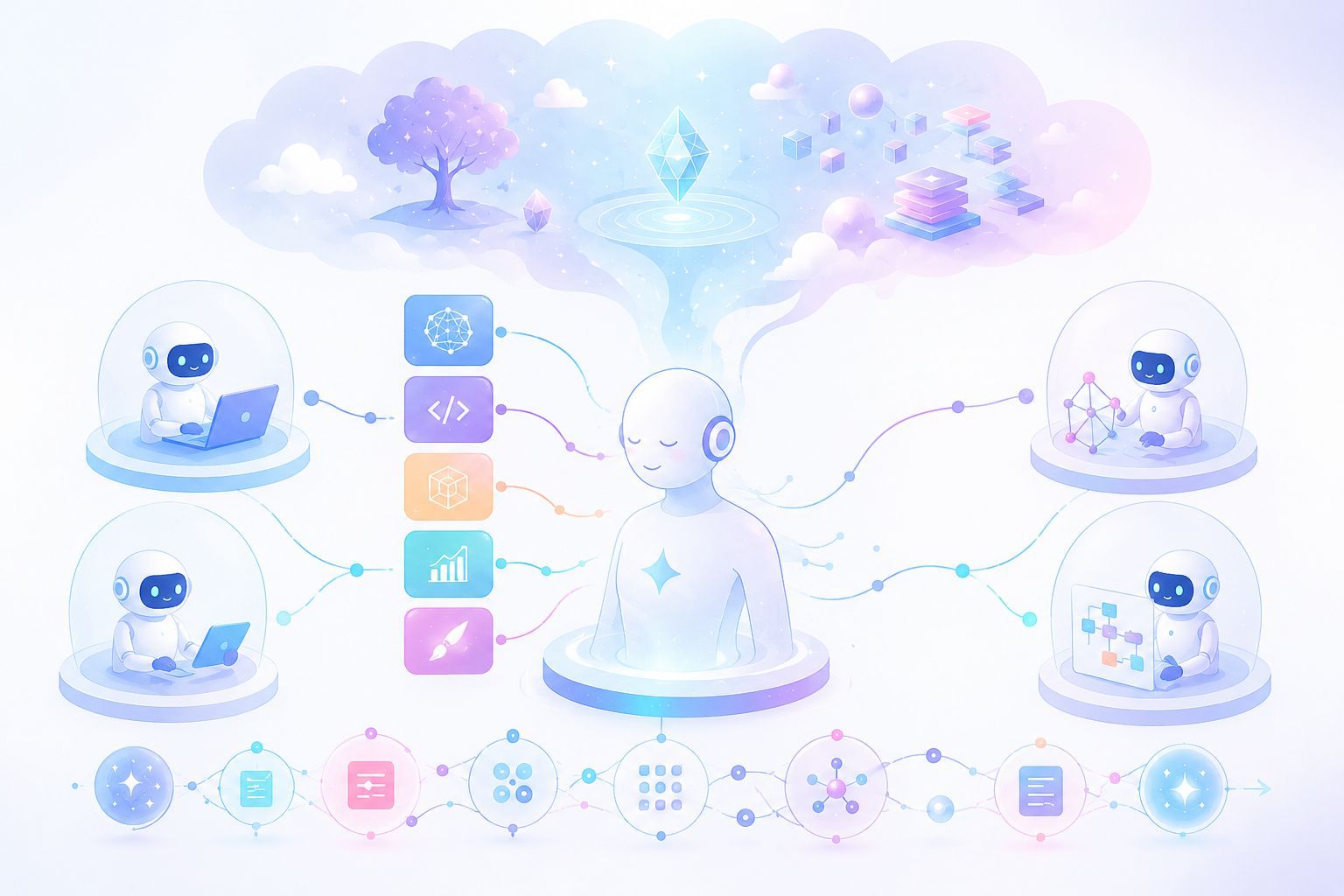
The conversation addressed how advances in areas such as agent specialization, contextual information management, persistent memory, and knowledge consolidation are transforming how artificial intelligence can understand and use large volumes of complex data.
While these technologies are still at varying stages of maturity, they represent a clear direction for the future of AI: systems better able to interpret information, maintain context over time, and generate useful knowledge from scattered data.
The challenge of transforming data into knowledge
In healthcare, one of the greatest challenges remains information fragmentation. Clinical data is generated in multiple formats, systems, and different moments along the care journey, making it difficult to understand and use effectively.
New artificial intelligence architectures aim to precisely address this challenge — enabling information to be organized, connected, and presented in ways that are more useful for professionals and patients.
An open vision for the future
Another prominent theme during the session was the importance of building open, interoperable technologies capable of working with different models, infrastructures, and technological environments.
At HISTORA, we share that vision. We believe the future of digital health lies in connecting information, reducing fragmentation, and enabling a clearer understanding of clinical data — regardless of where it originates or how it is managed.
As artificial intelligence continues to evolve, we will continue exploring and evaluating technologies that can help build more transparent, efficient, and people-centered systems.
The session was presented by Matías Molinas, CTO of HISTORA, as part of the research and technology monitoring activities the company conducts around the future of artificial intelligence applied to healthcare.